Download Transcript
Spencer Levy
Technology, generational demographics, even the impact of world-changing current events – in recent years, we've seen so many ways that our relationship with the workplace has been changed. On this episode, a perspective on being a business that's future-ready, come what may.
Jacob Morgan
I just find that there's a lot of confusion, a lot panic, a lot of uncertainty. And so what I'm trying to do is to bring a little bit more clarity and insight, perspective and direction, and hopefully a whole lot of positive vision and direction for where I think things are going.
Spencer Levy
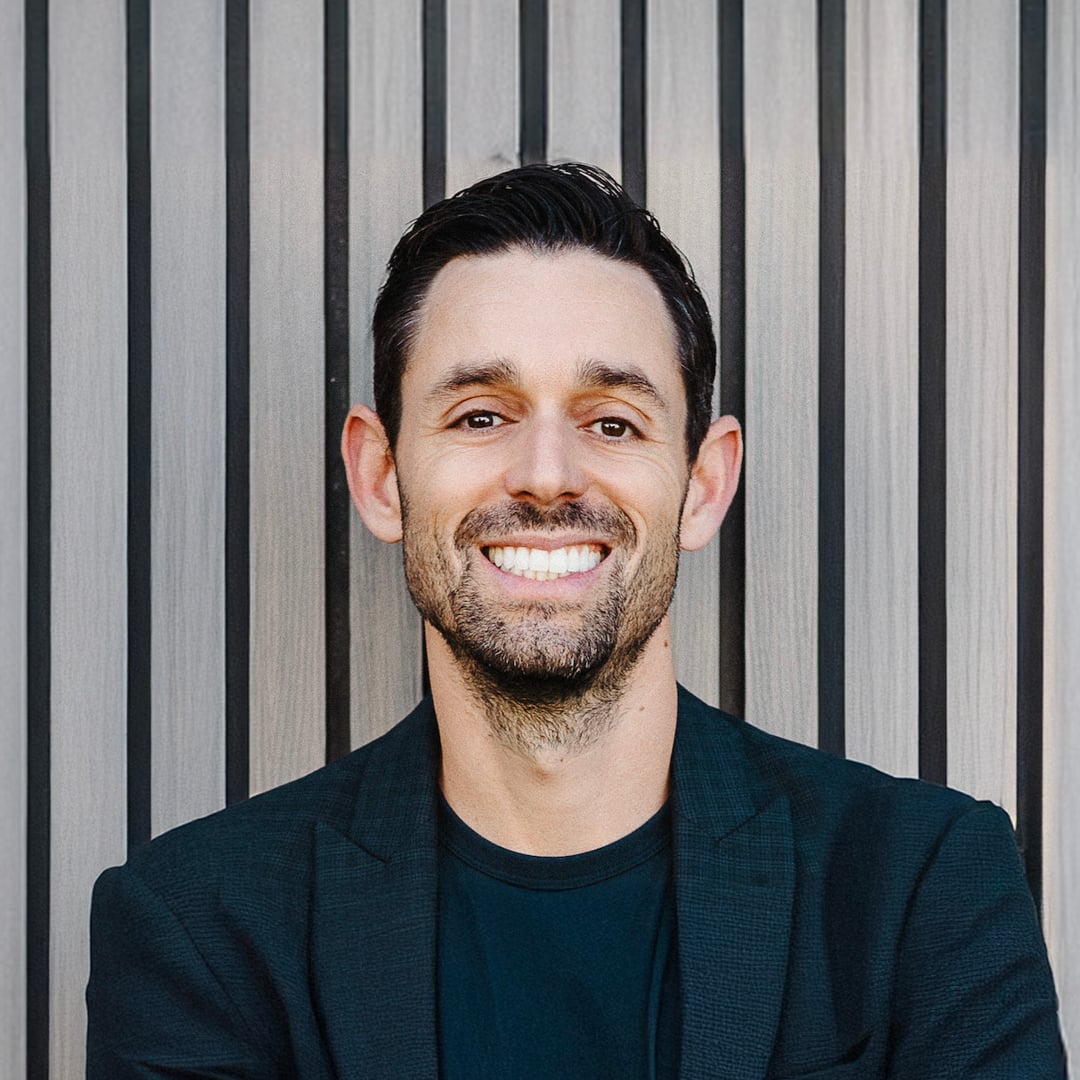
That's Jacob Morgan, an advisor and authority on employee experience, who we welcome back to the show for a discussion inspired by his latest work of thought leadership, namely a book called The Eight Laws of Employee Experience, How to Build a Future-Ready Organization. Jacob's also a futurist who runs a group called Future of Work Leaders, a global network of chief human resources officers with some of the world's top companies. Coming up: best-selling writer and futurist Jacob Morgan brings us another chapter of his work with insights for business leaders, real estate decision-makers, and talent in any field or industry. I'm Spencer Levy, and that's right now on The Weekly Take.
Spencer Levy
Welcome to The Weekly Take, and I'm delighted to be here today with Jacob Morgan, author of The Eight Laws of Employee Experience. Jacob, welcome to the show.
Jacob Morgan
Thank you for having me.
Spencer Levy
Before we get into the book, tell me what you're trying to do with respect to employees, the workplace, to analyze it and make it better.
Jacob Morgan
Well, my focus, kind of, theme that I have is on the idea of being future ready. And so I focus on creating future ready employees, leaders and organizations. And so for me, the concept of future ready means not being surprised by what the future might bring. It's paying attention to the signals and the trends that are out there and trying to help people understand what they mean and what they should do to prepare. And this is whether you're an individual contributor, whether you are a leader inside of an organization or whether you’re an executive representing the organization as a whole. I think there are a lot of really interesting and exciting things that are happening in the world. But a lot of people have a hard time trying to connect the dots, understanding what they mean. Specifically, when you look at things like AI, there's a lot of this kind of doom and gloom narrative that's out there. So I just find that there's a lot of confusion, a lot of panic, a lot of uncertainty, and so what I'm trying to do is to bring a little bit more clarity and insight, perspective, and direction, and hopefully a whole lot of positive vision and direction for where I think things are going.
Spencer Levy
What makes you a futurist?
Jacob Morgan
So a lot of people don't realize this, but you can actually get a professional certification and even a master's degree in foresight. And so I went back to the University of Houston almost a decade ago and received a professional certification in foresight. And really what the field of foresight is, is a series of tools and frameworks and models that you can use to think about the future. A lot of people kind of slap it on their LinkedIn profiles and it sounds cool and it looks nice, but there is actually a series of frameworks and processes and tools that you can use to help you think about the future. And one of the most famous of these frameworks that people may have heard of is called the Cone of Possibilities, which is a visual representation that you use. You can do these types of exercises with executives or with peers, but it helps you think through how the farther out you go in this cone, how different possibilities and scenarios can start to map out and how to figure out what would cause one of those futures to happen or to not happen. I like to analogize it to a game of chess. I play chess, my daughter plays competitive chess, and as a good chess player, one of the things that you have to do is you try to understand not just the move that you're making or a move that your opponent can make, but you think in terms of various possibilities, like different moves that could appear on the board, and you try calculate through all of them. Now it doesn't mean you can predict what your opponent is gonna do, but by calculating through different scenarios and options, When your opponent does hopefully make one of those moves, you have a response and or reply that you can use. And so the field of foresight is a series of tools and frameworks to kind of help you think through those scenarios and possibilities to give you some actions that you could potentially take.
Spencer Levy
I really did enjoy your book. There's so many different things we can talk into here, but the eight laws – tell us what they are, why we should know about them to learn about the employee experience.
Jacob Morgan
It wasn't actually supposed to be a new book. It was supposed to just be a second edition to a book that I wrote in 2017, which was called The Employee Experience Advantage. But as I started to interview CHROs for the book, I realized that I actually had a whole bunch of new content here that I could use.
Spencer Levy
What is a CHRO?
Jacob Morgan
Chief Human Resource Officer. And basically the entire premise is that I felt that organizations during and post pandemic completely lost their way when we think about talent and people and experience. And these eight laws are a challenge and a call to action for organizations to get back to the core things that matter at work because organizations completely lost sight of what those things were. So that is the framework for what these eight laws.
Spencer Levy
Wait, wait, wait. Stop there. I want to back up here. You said that organizations lost sight of what exactly? Of the purpose of work?
Jacob Morgan
Yes, that's one of the things. But I mean, if you think about what was going on during and post-pandemic, you had money that was essentially free. You had interest rates that were ridiculously low. You have companies that were over hiring, just bringing in whoever they could. You had organizations during the pandemic that were so scared of losing people that they would do anything and everything to keep them there. And so standards went down, perks went up, benefits went up. Compensation went up. Work from wherever you want. And I think we completely just shattered the notion of work, of leadership, of what it means to be an employee. You had leaders who were scared to speak up about anything because they didn't want to face backlash. You had CHROs that were creating Pinocchio Island type of organizations.
Spencer Levy
And what is a Pinocchio Island?
Jacob Morgan
Pinoccho Island is basically – so if anybody remembers the fable – it's the idea where you can basically show up to work and do anything and everything that you want, right? You expect to get free food. You expect not to show up to the office. You still expect to get your salary, your bonuses, your compensation. You expect perks and benefits. Like basically, you live in a utopian, unrealistic world and because the company was so scared to lose you and because the company was so starved for keeping and retaining talent, they were willing to go along with this. This is why now, post-pandemic, you see so many organizations making such a reverse. Like, the rubber band is snapping back, and organizations are saying, okay, we want you in the office now. And so you see so much of this rubber band snap-back happening, because during and post- pandemic, we just let everything go, and we created this Pinocchio's Island for most organizations, I think, around the world.
Spencer Levy
The study of the workplace has been going on for well over 100 years, and what I really liked about your book, among other things, is that you recognize that. Tell me about what you learned from the past – and when I say the past I don't mean 2015, I mean 1915, going all the way back – and how do we apply that to today? Because I see tremendous parallels because of technological advancement today that could be learned from what we were learning about the basic human psychology of work 100 years ago.
Jacob Morgan
Yeah, I mean, it depends how far back you want to go. For me, one of the stories that I thought was most interesting was the Ford one where, you know, in the – what was it? – 1914. You know, Ford created the sociological department where he would literally have employees from Ford come knock on your door to inspect how you live. Now, the rationale was that he was doubling the salary of the average American worker, and so his rationale was that if I'm going to be paying you more than everybody else, I wanna make sure that the money that I'm giving you is being invested properly. So you're not a drunk, you're a derelict, you're not a gambler, you don't live in squalor. If I'm gonna pay you to be a worker at this company and pay you a lot of money, I wanna be sure that you can be a responsible person. And so he would literally have employees from his company show up, knock on your door, and interview you, your wife, your kids, and take a look at how you lived. Now obviously today, that would not work, but the idea of it makes sense. And the idea is trying to know your people. But as far as broadly speaking, what we can learn from the past, oh my goodness, I think there are a lot of things. In the past whenever you look at any kind of a technological revolution – whether it was the spinning genny, whether it the steam engine, whether it electrification or mechanization, I mean any of these things – the only difference is that those types of transformations that we saw in the past usually took a couple decades to manifest in terms of productivity and we had slow gradual change over the years for which to adapt. The argument that a lot of people make now when it comes to AI is that we no longer have these decades to adapt and to change, we have several years. And so you could draw parallels to what we've seen in the past but trying to compress the time horizon to make sure that we're able to make changes quicker. Which is why one of the things that I argue for is I'm very optimistic about where we get from point A to point B. Like I'm optimistic about point B, but the challenge that I see is the transition period from point A to point B. So if we were to fast forward three, four, five years from now, I'm optimistic about what that world is gonna look like. But to get to that point from now is where I think we're starting to see some challenges. There was a study that just came out today at the time of the recording from the Milken Institute where I was think it was like 80% employees today they want to see some sort of government guidance some sort of workforce programs in place to at least think through the potential repercussions of what might happen as a result of AI and so in the past whenever we've done these types of programs or interventions we've done it when it was way too late and so a lot of people are arguing we need to think through these things now so that if we get through this kind of a jobs apocalypse that we have some sort of a backup plan, so to speak.
Spencer Levy
So one of the quotes that you have in the book is, “We lost sight of the purpose of work.” That is the quote from the book. And then the sub-quote is, “Companies spend more money on the employee experience, but the scores have never been lower.” Okay, those are pretty powerful statements. Then you have your eight laws, which I'm just gonna read for the benefit of our listeners. First one is to “code the human signal,” which you talked about. Second is “act with empathetic excellence.” Third is “grow or go.” Four is “design for flexibility.” Five: “make people the first principle.” Six is “lead like the experience starts with you.” Seven: “use technologies to amplify humanity” and AI. I think we just beat that horse. And then eight is “run culture like an operating system.” Start where you like.
Jacob Morgan
Okay, so decode the human signal. I won't spend a lot of time on it. Basically this idea of know your people. Know your people on the human side. Know your people on the tech side – aka surveys and things like that that you do. Act with empathetic excellence refers to a lot the backlash that we've seen around DEI over the coming years or the past few years and it basically makes the argument that there are three things that you should be caring about most that make up the empathetic excellence equation and that is merit, competence and empathy. Law number three is grow or go, which makes the argument that learning and growth is a new form of job security. So if you want your people to stay at your company, give them the opportunity to learn and grow, otherwise they're just gonna go. Law number four: design for flexibility, not just in terms of where people work, but being able to shape their career paths, kind of like knobs on a dial that you might be able to adjust. Now, I also wanna quickly preface that some of these laws–these were all written about and talked about with a five to 10-year horizon period. So I agree that not all these things are possible today, but I'm thinking of where things will go in the future. On number five, make people the first principle, which is kind of exactly what it sounds like. How do you actually put your people first instead of just having it sound like values hanging on your rafters? Law number six is lead like the experience starts with you, which talks about leadership, how leadership is changing, what the new archetypes of leadership are. Law number seven is use technology to amplify humanity. So not as a way to replace people, but how do you unlock their unique human capabilities and spotlight those. And the last law is run culture like an operating system which, similar to your computer or your phone that has an operating system, culture operates the same way, upgrades, changes, bug fixes, et cetera. And so together, these are the eight laws of employee experience to build a future ready company.
Spencer Levy
You also say in the book, “psychological safety should be a standard.” I think what that really means is that employees should be free to speak their minds about what's going on without a fear of negative repercussions. Obviously, at the margins, you can't say anything, but you gotta just have the ability to have a straight conversation with your peers. Yes. But you can also have too much psychological safety as well. Well, tell me about both sides of that.
Jacob Morgan
So there's been a lot of safety-ism that's been created, not just in our personal lives, but also inside of organizations as well. And I think a lot of people took the concept of psychological safety to mean that there's no such thing as a bad idea, that you can say anything that you want, there's not such thing as a question, and that's not quite how this works. There are such things as bad ideas. You can say something stupid, and it is okay to acknowledge that. Psychological safety does not mean that you have the right to never be offended at work. Psychological safety does not mean that you have a right to never get in an argument or a debate with a peer or a colleague. Psychological safety simply means that your employees have the opportunity to speak up. That's simply what psychological safety means, right? You can just speak up and share and talk freely.
Spencer Levy
One of the words you talk about a lot here is accountability. And the accountability is with respect to both the employee and the employer and how they behave with one another. But you also talk about, there are six different employee types. So there's a lot of different employee types within your organization. And very often in large organizations, they try to homogenize is the wrong word. But they treat employees very similarly with respect to training and other things. For good reasons, right? You should try to treat people equally, but there are different types of folks. How do you deal with employees that are that different?
Jacob Morgan
Yeah, you do have a lot of different employees, but I think it's the same way you deal with any differences that you have in your life with anybody else. I have two kids who are very different. I have friends who are very different. You adjust and adapt the same that humans do. But I think this is, obviously, in law number one, which is decode the human signal. When you understand the different types of employees that you have, you understand how to treat them and how to engage with them and how to give them what they need to be successful. So in the case of the “aspiring climber” I know that that's somebody who's probably willing to work more hours. I know that somebody who's probably willing to take on more stretch assignments and goals, who's willing to travel, who's going to go and do things than maybe most other people would not because this is somebody who just wants to grow and climb as much as possible. The “overwhelmed caregiver” – I know, that that's somebody who is probably, maybe in the sandwich generation where they're looking after somebody who maybe older and also maybe a child. So in that situation, maybe I'm gonna try to give them a little bit more flexibility. I'm going to pay more attention to them maybe getting burned out. I'm gonna see what sort of benefits our company offers that maybe can assist and help them in some sort of a way. So understanding the different types of employees you have is gonna allow you to create the best environment that you can for each employee to succeed in the best way that they can. Now it doesn't mean that one is better than the other or that one's worse than the others, just different types people shaped by the circumstances and situations they have going on in their life. I think the important thing is to be able to be honest with employees about expectations. And so we see a big debate here, for example, when it comes to, like, return to office. And so I always tell employees, if you have aspirations of working, let's say 32 to 40 hours a week, that's fine. But don't then expect to get into a senior leadership role. It's just not realistic and not possible, okay? And so the big challenge, the big disconnect that a lot of people have is number one, we inside of organizations are scared to be honest with our employees about what it takes to get to a certain level. If you listen to Dara [Khosrowshahi], the CEO of Uber, he recently went on the diary of a CEO podcast. And he was very blatantly and brutally honest about what it takes to work at Uber. He said, if you don't wanna work like a crazy person, this is not the company for you. If you go work for any of Elon Musk's companies, do you think you're gonna be working 32 to 40 hours a week? No. You're gonna be working 60, 70, 80 hours a week on some of the world's toughest problems with some of world's smartest people. But you're doing that because you understand what you're getting into and you understand what you are getting out. At JP Morgan Chase recently, there was a tool that junior analysts and bankers tried to hack because it would cut them off after they worked 80 hours a week. And these hackers, these junior employees were working more than 80 hours a week, but figured out a way to kind of like shimmy the tool a little bit so that it only showed up at 80 hours. So the point is you have to make sure that your expectations are aligned with your inputs. This is an open and honest conversation that needs to be had between employees and leaders of organizations. And this is why I say 2026 is the year of accountability and responsibility. AI is taking away a lot of the performative work. And so, so many organizations now are pushing back and they're saying, okay. We want to better understand how are you, Jacob, impacting the bottom line? What are you specifically doing? And this is why I said 2026 is the year of accountability, because you have to demonstrate the impact that you are having to the business. You can't hide behind performative work anymore.
Spencer Levy
I like people, I'm a people person, dammit. You know where that quote's from?
Jacob Morgan
That people might not get that reference. Yes, fantastic movie, and it's sort of like a predictor of the future. What do you actually do here?
Spencer Levy
That was from Office Space, because what you just said came directly from Office Space. I think that line, what do you actually do or was in the movie?
Jacob Morgan
Yeah, what do you actually do here? My guy's freaking out. I'm a people person. Yep Exactly. Fantastic. You're making me want to rewatch it now
Spencer Levy
See that? You got Office Space in the same podcast.
Jacob Morgan
Yeah. And one thing I want to mention on that really quick before you jump on the next one, this always boggled my mind. And it was that, you know, I think the balance of power has shifted dramatically back into the hands of organizations. And I think that's a very good thing. During and post-pandemic, you can make the argument that it was maybe 80% in the hands of employees, 20% or so in the hand of organizations, and now it's flipped. And there are some people who say, well, no, that shouldn't be like that. It should be 50-50 and I always tell them are you insane like I have two kids – a five-year-old and a nine-year old. If my kids come home from school and they say that they wanna have candy and cookies and ice cream and pizza for dinner, my answer is gonna be no. This is not an equal vote. I will listen to what you have to say. If you wanna make a very compelling argument, I will listen to you but there is no way on planet Earth that I'm gonna be giving you that for dinner because it's my house. It's my rules. I pay for the groceries, I pay the mortgage, I pay everything, like, it's just not an equal 50-50 accountability and responsibility split. The same thing is true at work. It's the organization that's paying your salary, it's the company that's paying for your benefits package, your bonuses that you get, the tools, the equipment that you use, the space in which you work. It's a company that built the entire infrastructure, the foundation that allows you to get work done, they bring in the customers, they do all of these things. And so the idea that employees believe that there should be some sort of a 50-50 split is crazy to me. And so when a lot of employees were saying, I don't want to come back to the office. Tell me why I need to come. Make me come back in. Now what are companies saying? You don't come back? That's fine. I got a bot that can do your job, and it's going to do better and faster than you. Bye bye. So. We need to be realistic about the accountability and responsibility of employees. Now, I'm not saying that companies should treat you poorly. A company also has responsibilities, give you learning and training and growth opportunities, give you the psychological safety that we talked about, give you a leader who has your back, who challenges you and pushes you. But no employee should make the mistake that when they show up to work every day, that they somehow have an equal voice and representation to the leaders who are running that company. That is not how it works. And I think that is how a lot of people felt during and post pandemic, which created this false sense of security and partnership that just does not exist in the real world.
Spencer Levy
Jacob, I'm going to stop you there for a second, because when I was listening to that, there was a little bit of fear factor in me. It was like, you're not in charge, we're in charge. And I don't want that to be the impression here. I just don't. Because it's not true. All right? I agree with you about the balance of power thing, OK? I'm not denying that. OK. We're in agreement on that, generally speaking. But if you're an organization listening to this, how do you get better given where we are today?
Jacob Morgan
Yeah, and some people hear that and they do think of the fear. But that's why I made a very specific point to call out that the organization has some very specific responsibilities to you, which is, again, it's the psychological safety, it's leadership, it's training, giving you the tools and resources, treating you fairly, like all of those things still play a role when it comes to the responsibility that a company has. We're not talking about creating some brutal working conditions and employees fighting back and the company saying, no, you have to do it anyway. I mean, this is, after all, an employee experience book. So I'm a big believer in companies creating a great experience for their people. So that's the accountability of the organization. But the employees need to be more accountable and responsible over the work that they do. They need to be more honest and clear with their expectations of inputs and the result of their outputs. They need to show up every day trying to do their best. I mean there are certain responsibilities that employees have. And the argument that I made is that during and post-pandemic, the standards went down, employees asked for more, more benefits, more equity, more perks, and on top of that, they were telling their companies they didn't even wanna show up to the office anymore. And so now we're seeing kind of a rebalancing of that. Where companies are saying, we're done with all of that stuff, it's time to get back to the core aspects of work.
Spencer Levy
I do want to get to what you call “The Notable Nine” and what the Notable Nine is how to be an effective leader for mindsets five skill sets I'll read them quickly and I'd like you to comment: mind, explorer, chef, servant, global citizen, skills coach, futurist, tech teenager – lord knows what that means, because my kid keeps playing video games – Yoda, vulnerable, and a transformational leader is the other one. Any comment on how to be a better leader? Those are the Notable Nine.
Jacob Morgan
Yes, so this was actually taken from a previous book that I wrote called The Future Leader, and I talked to 140 CEOs, and I wanted to mention this in there because obviously this goes into the chapter of leadership, and so these are basically the four ways that leaders need to think and the five things that they collectively need to know how to do. And so they encompass everything from trying to serve your team and your customers and yourself and your employees to helping make other people more successful than you, to thinking like a futurist, which is one of the things that we talked about, to being able to balance humanity and technology effectively. So it's a leadership framework for mindsets and skills that I think is very relevant for a lot of companies and people around the world.
Spencer Levy
While we're on references here, being a great employee, and obviously you mentioned there's different types of employees, but how much should an employee, to quote Frank Sinatra, I always gotta get a Sinatra reference in here, toot their horn. There was a song by Frank Sinatra, it's called “Toot Your Horn”, in that you shouldn't be a passive taker of your job, of your life, but you need to advocate for yourself. What's Frank Sinatura right?
Jacob Morgan
Oh, you 100% need to advocate for yourself all the time. Now, there's a difference between advocating for yourself and boasting and bragging about yourself. Those are different things. But advocating for yourself means that if you do a good job, it's okay to say, yes, I did a good, thank you. If there's an opportunity to step into a role that's challenging, it is okay to raise your hand and say, I want that role. It's okay to have a conversation with your leader and say hey, I've been at this company for eight months, for a year, and I'm really starting to think about kind of future direction. Can we have a conversation about it? It's okay to do all of these things, because nobody's gonna be doing them for you. My daughter, who I mentioned, she's nine years old. She plays competitive chess, and she learned this the hard way because she was playing a chess tournament a couple months ago. And in the middle of her chess tournament, there was kind of an argument or a disagreement between her and her opponent. Long story short, my daughter went from being in a winning position on the board to being in a losing position on board. And this was the first time that she had to call over an arbiter. And she was freaked out. She didn't know what to do, and she didn't know how to advocate for herself, and the arbiter ruled in favor of her opponent. And so she comes out of the chess game, she's freaking out, she's crying, this and that. And I said, you know, you learned a very important lesson, which is that if you don't know how to speak up and fight for yourself, other people are gonna take advantage. And so a similar situation happened at a future tournament where her opponent touched a piece – and you know in chess, if you touch a piece you have to move that piece. And so her opponent touched a piece and then he didn't wanna move it. My daughter put her hand up, she advocated for herself, she said what happened, and she ended up winning the game because her opponent tried to get away with something. So you do have to know how to advocate for yourself in all scenarios, in all situations and circumstances. Life is tough, work is hard. And so if you don't advocate for yourself, you can't assume that there are gonna be other people out there who advocate for you.
Spencer Levy
So Frank Sinatra was right when it comes to “toot your horn”, but he wasn't right, going back to where there are limits to psychological safety in my way, in the sense of, you can't just do it “my way”. And by the way, that was Paul Anka, not Frank Sinatra, even though Sinatra is famous for singing it, because this is our way, not my way. Is that a fair way to put it?
Jacob Morgan
Yeah, I think the most important thing comes back to the idea that nobody's gonna look out for you but you. And we talked a little bit about this concept of fear. I think 20% fear is a good thing. I think everybody should always have a little bit of fear at all times. I mean, you shouldn't show up to your company shaking, but whether you're part of a sports team, whether you are showing up for a chess tournament, whether you showing up to work every day, there should be a tiny part of you that is sometimes a little scared. Because that little bit of fear is going to get you to work harder, it's going to get you do better, it is going get you focus more, it will get you build better relationships, it's gonna get you think more about the future and preservation and what you can do to make sure that you not just survive but thrive. And so people who have no fear end up hurting themselves. What happens when you have no fears? You do something stupid and you break a leg, you break an ankle. But when you have a little bit of fear it keeps you in check. And so I think it's actually a little bit important. For everybody to have just that tiny bit of fear, because in my opinion, it'll lead you to better things.
Spencer Levy
You know who you sound a lot like, Jacob? Adam Grant, psychologist. I had him on the show, and he talked about the importance of fear. What I was arguing, that the most important human characteristic is grit, is just being able to pull up your bootstraps and go. He said, grit will get you killed on the mountaintop. He said you gotta be a little scared up there, because if you're not, it could hurt you. So it's really a balancing act between fear and grit. Because, look, I wish fear wasn't a motivator. I'm being very direct here, because I think fear has a lot of very, very negative, damaging psychological implications if you are too afraid.
Jacob Morgan
Yeah, if you're too afraid, you get paralyzed to do anything. But a little bit afraid is a good thing, right? When I would play in chess tournaments, when my daughter plays in chess tournaments, she's always a little scared. Yeah, I mean, she's not scared to the point of like, I can't go in there, I can, but it's scared to point of, like, okay, I'm a little nervous, and you know, because I'm scared at the beginning of the game, I'm gonna try to settle in and think through my moves a little more carefully, and then it allows you to really focus, and then the fear goes away and you get into the zone. But people who are not scared, for example, when they go into a chess tournament, they start blitzing out their moves and they lose the game in five, 10 moves because they were careless. When you have no fear, you don't put a helmet on and you go on your bike and you try to jump off your sidewalk and end up injuring yourself. So a little bit of fear when you do anything, I think is a good thing. But I completely agree with you. You don't wanna be so scared where you can't actually do the thing that you're doing. Because that is the worst possible thing that can happen to you is when you're so scared, you don't try, you don't speak up, you don’t advocate for yourself, you don’t take on the new opportunity, you show up to work every day and you're miserable. Completely agree, I would never advocate for anything like that.
Spencer Levy
Since we brought up chess so many times, I just got to ask, because my dad and my grandfather were big chess guys. Well, it speaks to a story I've never told on air. My grandfather, Saul Levy, was an excellent chess player until he read a chess book. And the reason was, before he read the chess book, he was just a brilliant man. By the way, he was a New York City cab driver. Brilliant man, and just intuitively understood it, thought about it in a way that wasn't taught. And then once he was taught, he was very beatable. And so sometimes, and I think this talks about the differences in employees, sometimes having creativity outside the box is your secret weapon, kind of like maybe it was for Deep Blue, it was thinking outside the boxes and it didn't even know it.
Jacob Morgan
Yeah, yeah, exactly. I mean, it's one of the things they say about kids, right? They're always creative and this and that and then they end up going through school and they go through and work for a company and the creativity is educated out of them So yeah, once you follow a template in a process you get constrained by that template in that process and you start to think differently So I always try to encourage my daughter to experiment and try things on the chessboard.
Spencer Levy
Well, you should. And by the way, next time your kids ask for milkshakes and donuts for breakfast, you know, once in a while, give it to them.
Jacob Morgan
Well, Saturday we do – well, not for breakfast. Nobody's getting a milkshake and for breakfast. But if we're talking about, like, a dinner, you know, Saturday we'll do movie night, we'll get pizza, we'll eat ice cream, we'll have some junk food in the house, but it's not gonna be the first thing they get when they wake up in the morning.
Spencer Levy
Spoken like a true dad – and a good one, I might add. What's the final message you want to give folks with respect to your book? And when I say folks, I want to be very clear here. What’s the message you want employees to hear? What's the message you want employers to hear?
Jacob Morgan
Well, I think for everybody in general, the future of work isn't something that happens to you. It's something that you have to build, it's something you have you have create, and it's something that you have shape and design for. And so, for employees, you need to be asking what does the future work look like for you? What kind of a role, a job, a function, a company do you want to be a part of? What sort of a life do you wanna have? And for leaders of organizations, the same thing as well. It is what kind of company do you want to build and what steps are you gonna take to actually build it? If you assume that things are just gonna happen to you, that you're sort of just a leaf blowing in the wind, I think that's probably the least successful and worst approach that you can take. So we need more agency, more accountability, and more responsibility, and that should be the most empowering and I think exciting message for people, is that you have the opportunity to shape what your career path looks like, and as a leader, you have opportunity to shape what kind of people you attract and what kind company you become.
Spencer Levy
So on behalf of The Weekly Take, what a pleasure today with Jacob Morgan, not only a great speaker but a leadership advocate, a futurist, author of several books, and a terrific guest here on The Weekly take. Thank you very much for joining us.
Jacob Morgan
Thank you for having me.
Spencer Levy
For other insights from Jacob Morgan, you ought to take a listen to his other appearances on the show when we explored big ideas from his previous bestselling books on workplace trends and leadership. You can find that in our archives at CBRE.com/TheWeeklyTake or on your favorite podcast platform. Subscribe and stay tuned and we'll keep you plugged into the latest and best thought leadership right here. And please feel free to drop us a line to let us know what issues are front of mind for you or your organization. We'd love to hear your thoughts. As always, thanks for joining us. I'm Spencer Levy. Be smart. Be safe. Be well.

.jpg)