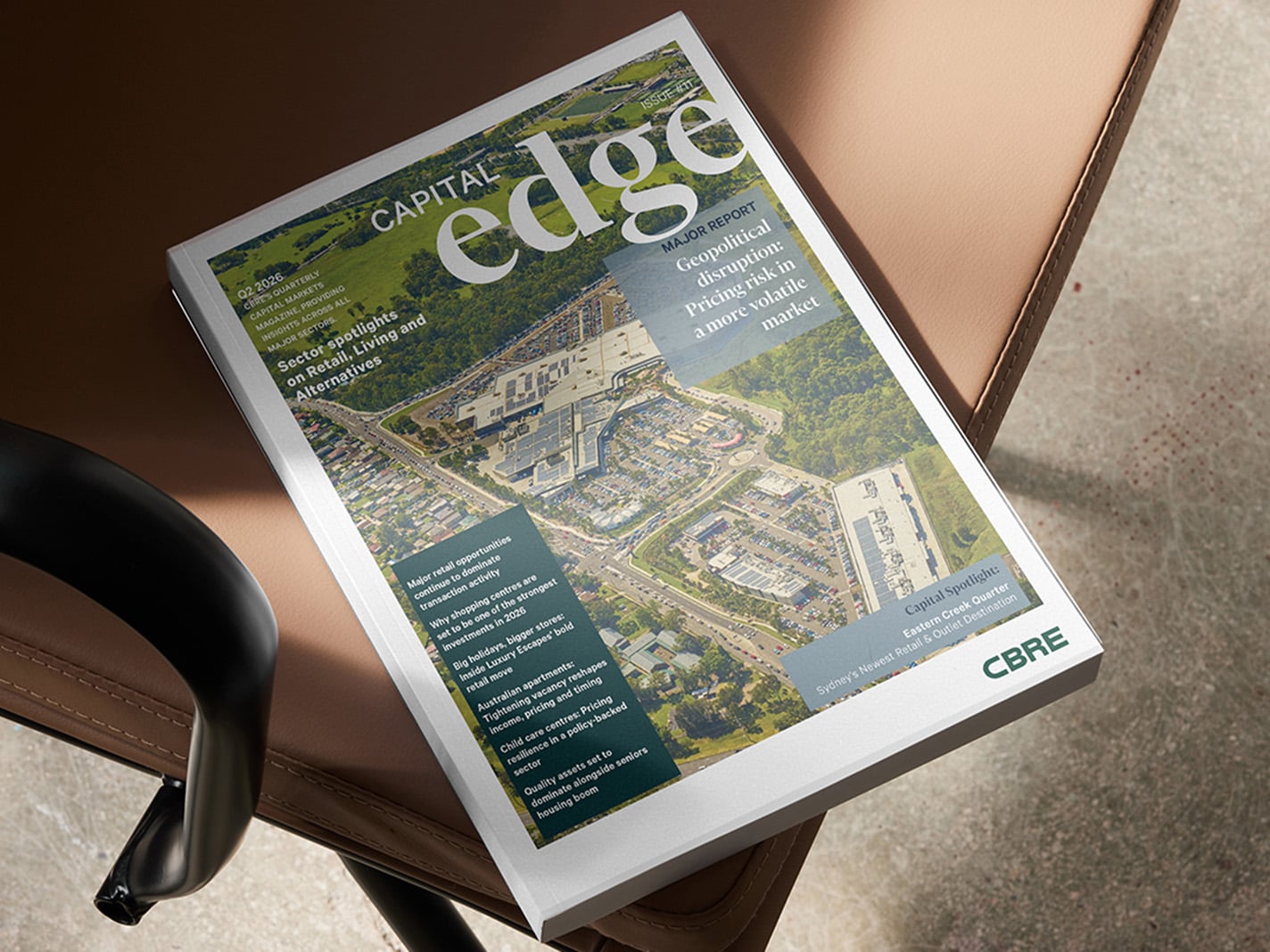
Capital Edge
Business Insights | Brisbane 2032: A Long-Term Catalyst for Industrial & Logistics Growth
Brisbane 2032 is expected to be a catalyst rather than a one-off demand event for industrial property. Major transport infrastructure, population growth and stronger freight connectivity will reinforce South East Queensland's industrial fundamentals, supporting long-term demand and land value growth.
July 22, 2026

Explore the full report
Click HereAt the centre of this opportunity is an unprecedented infrastructure pipeline. Queensland is forecast to invest more than $71 billion in infrastructure over the next four years, while more than $70 billion in transport projects are planned or underway across South East Queensland. Major projects such as Cross River Rail, Brisbane Metro, the Coomera Connector and Direct Sunshine Coast Rail will significantly improve connectivity between freight gateways, industrial precincts and population centres.
For industrial and logistics occupiers, better connectivity means more efficient movement of goods, improved access to labour and stronger links to key assets such as the Port of Brisbane and Brisbane Airport. As a result, established industrial locations including the Australia Trade Coast, Port of Brisbane, Acacia Ridge, Logan Corridor and Ipswich/Swanbank are expected to be among the key beneficiaries of Olympic-related infrastructure investment.
Importantly, Brisbane's industrial market is entering this period from a position of strength. Vacancy remains below long-term equilibrium levels, while demand continues to be supported by population growth, e-commerce activity, food and beverage distribution requirements and increasing trade volumes. The Olympics are expected to amplify these existing drivers rather than create an entirely new source of demand.
CBRE estimates Games-related construction and event logistics could generate an additional 150,000 to 300,000 square metres of industrial demand by 2032. This is equivalent to approximately five to ten large-scale logistics facilities and could represent up to a 10% uplift in annual industrial demand across the region. However, the report argues that the most significant impact will not be this temporary demand, but the longer-term economic and infrastructure legacy that follows.
There is strong precedent for this outcome. Analysis of previous Olympic host cities including London, Paris, Los Angeles and Sydney found industrial markets consistently benefited where Olympic investment improved transport connectivity, accelerated urban renewal and increased competition for strategically located industrial land. In London, for example, the redevelopment of Stratford and significant transport investment contributed to strong industrial rental growth and long-term land value appreciation.
Historical evidence from Brisbane also points to a clear relationship between infrastructure delivery and industrial land value growth. Major transport projects such as the Gateway Bridge duplication, Airport Link and Legacy Way have coincided with stronger growth across strategically positioned industrial precincts. Markets with direct access to freight infrastructure and transport corridors have generally outperformed the broader industrial market following periods of significant investment.
While the outlook is positive, the report also highlights several risks. Rising construction costs, labour shortages and competition from other major infrastructure projects may limit future development activity. CBRE estimates that around 30% of Brisbane's 2027-2028 industrial supply pipeline may not proceed in its current form if cost pressures persist. This could further constrain supply and reinforce rental growth over the Olympic delivery period.
Ultimately, Brisbane 2032 is less about a one-off event and more about accelerating the region's long-term growth trajectory. For industrial and logistics investors, the greatest opportunities are likely to emerge in well-located precincts that benefit from lasting improvements to connectivity, productivity and land scarcity.
Explore More Insights from Capital Edge
Australian real estate investment rises 16% in H1 2026 as all sectors record growth despite global uncertainty.
An insight-led conversation with Sam Saghir-Pashley on navigating global capital markets, building a career across continents, and why data centres and industrial assets are attracting unprecedented investor demand.
With over $418 million in transactions since 2025 and consistent yields, Australia’s fast-food sector is proving its strength as a defensive, high-demand asset class.
A look at landmark industrial, logistics and life sciences deals driving capital markets activity in Australia.
Explore the latest agribusiness property opportunities, from productive landholdings to assets backed by scale, water security and growth potential.
Explore the latest private wealth opportunities across industrial, retail and convenience assets attracting strong investor interest.
Read the Latest From Capital Edge
In each issue we bring you critical insights, data points, trends, and transactions to help you stay ahead of the curve in the evolving world of Capital Markets.