Evolving Workforces
6 Life Sciences Talent Trends Driving Property Demand
June 24, 2026 3 Minute Read

The U.S. life sciences industry is at an inflection point: hiring is picking up, capital markets are loosening and the pool of available talent is broadening to more locations. Structural shifts in how companies use space and how universities are training the next generation of scientists are reshaping what the next cycle of growth will look like. The following six trends help explain where life sciences property markets are headed in 2026 and beyond.
01. Hiring Turning a Corner
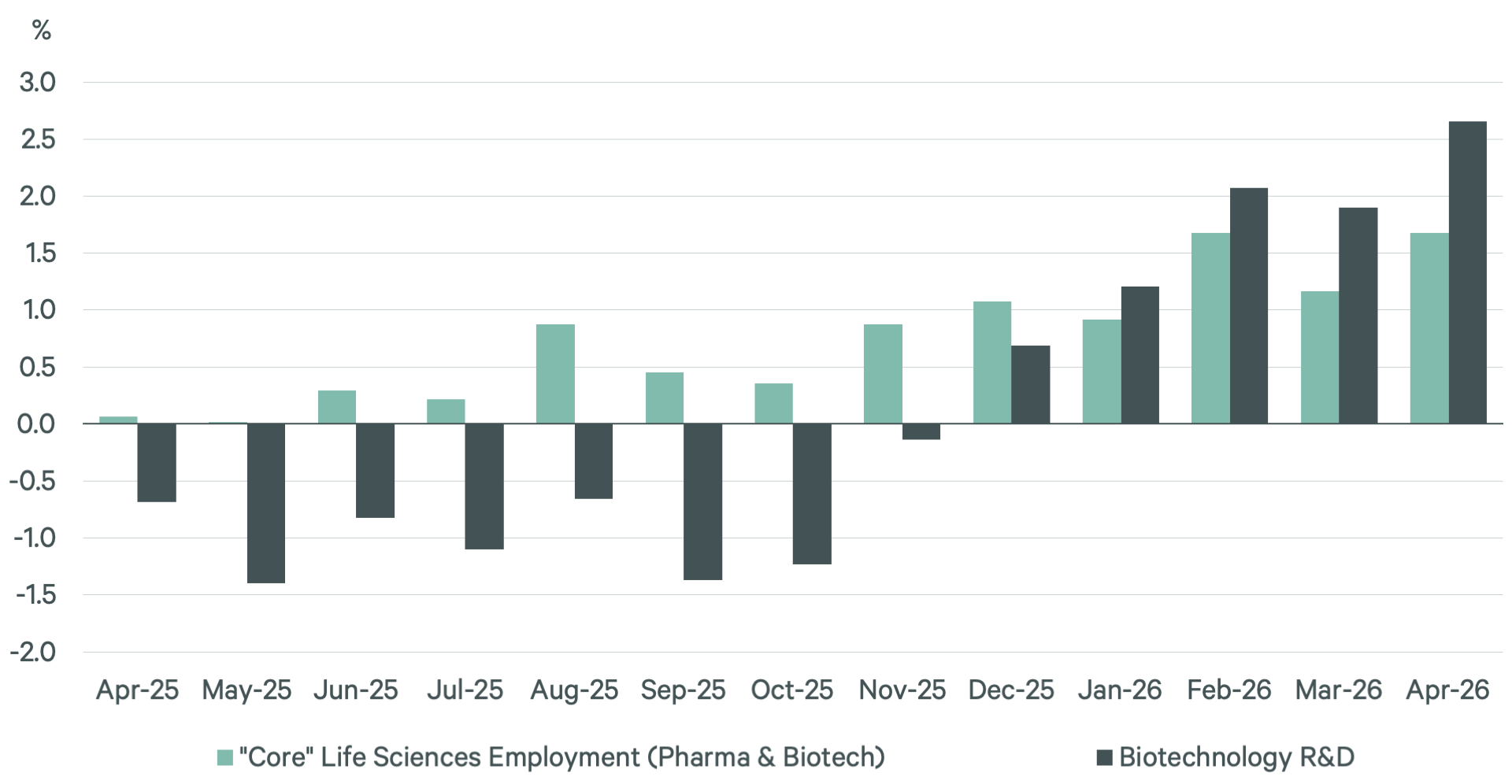
Core life sciences sectors are showing clear signs of recovery. Biotechnology R&D and pharmaceutical & medicine manufacturing, which are the key drivers of top-tier lab demand, recorded their fastest pace of job growth in nearly three years as of early 2026, with biotechnology R&D roles surging by 2.7% year-over-year.
Figure 1: Year-over-Year Life Sciences Employment Growth
02. Secondary Markets Stepping Up
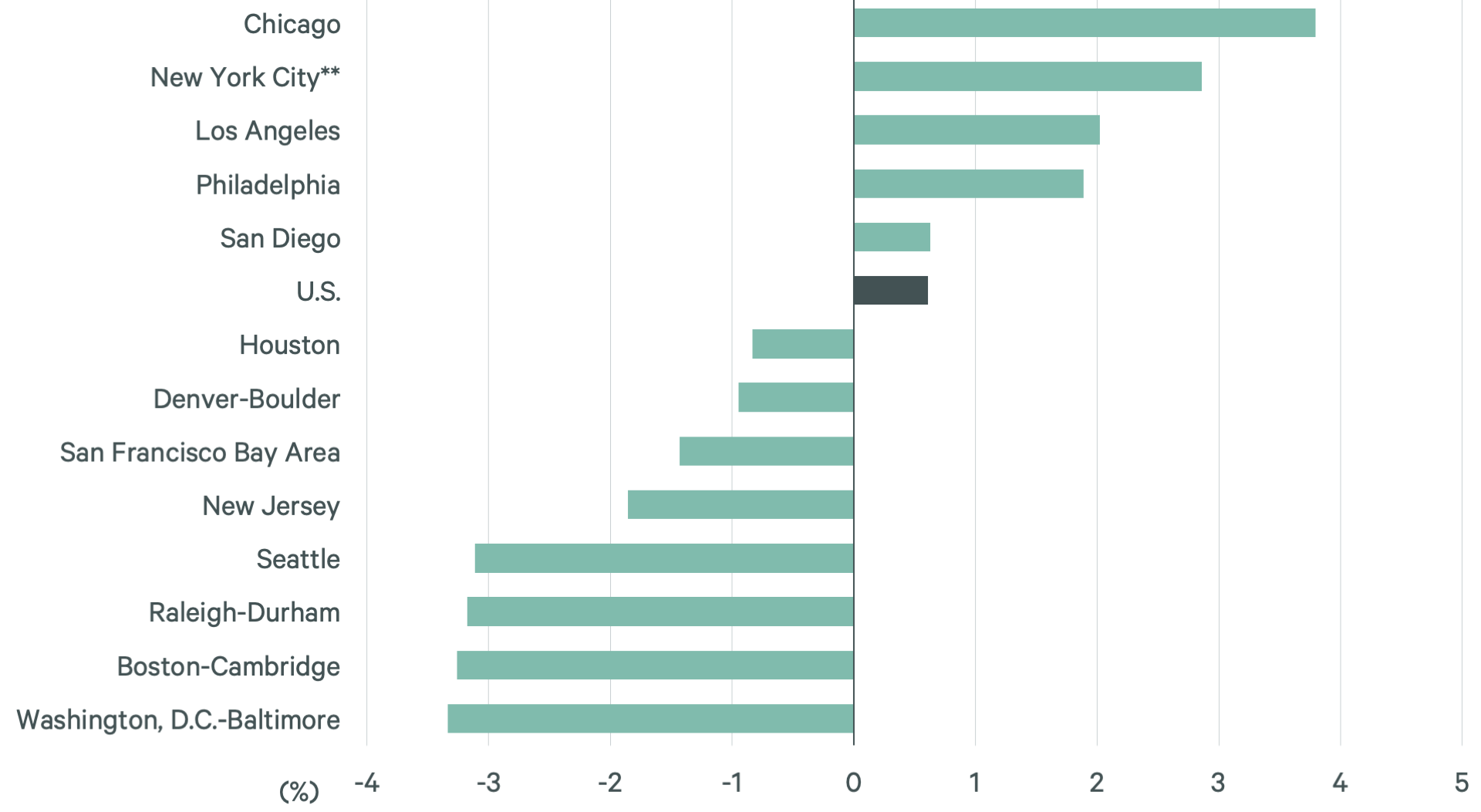
Secondary life sciences markets are reestablishing their importance in the nation's life sciences ecosystem. Chicago, Philadelphia, Los Angeles, Houston and New York each recorded record levels of core and total life sciences employment in 2025. These markets are no longer simply alternatives; they are established destinations for life sciences talent and investment.
Figure 2: Year-over-Year Employment Growth in Core Life Sciences Subsectors*
**Includes Long Island and Westchester, Putnam, Rockland, Orange and Dutchess counties.
Source: U.S. Bureau of Labor Statistics, CBRE Research, Q2 2026.
03. Workplace Density Continues to Increase
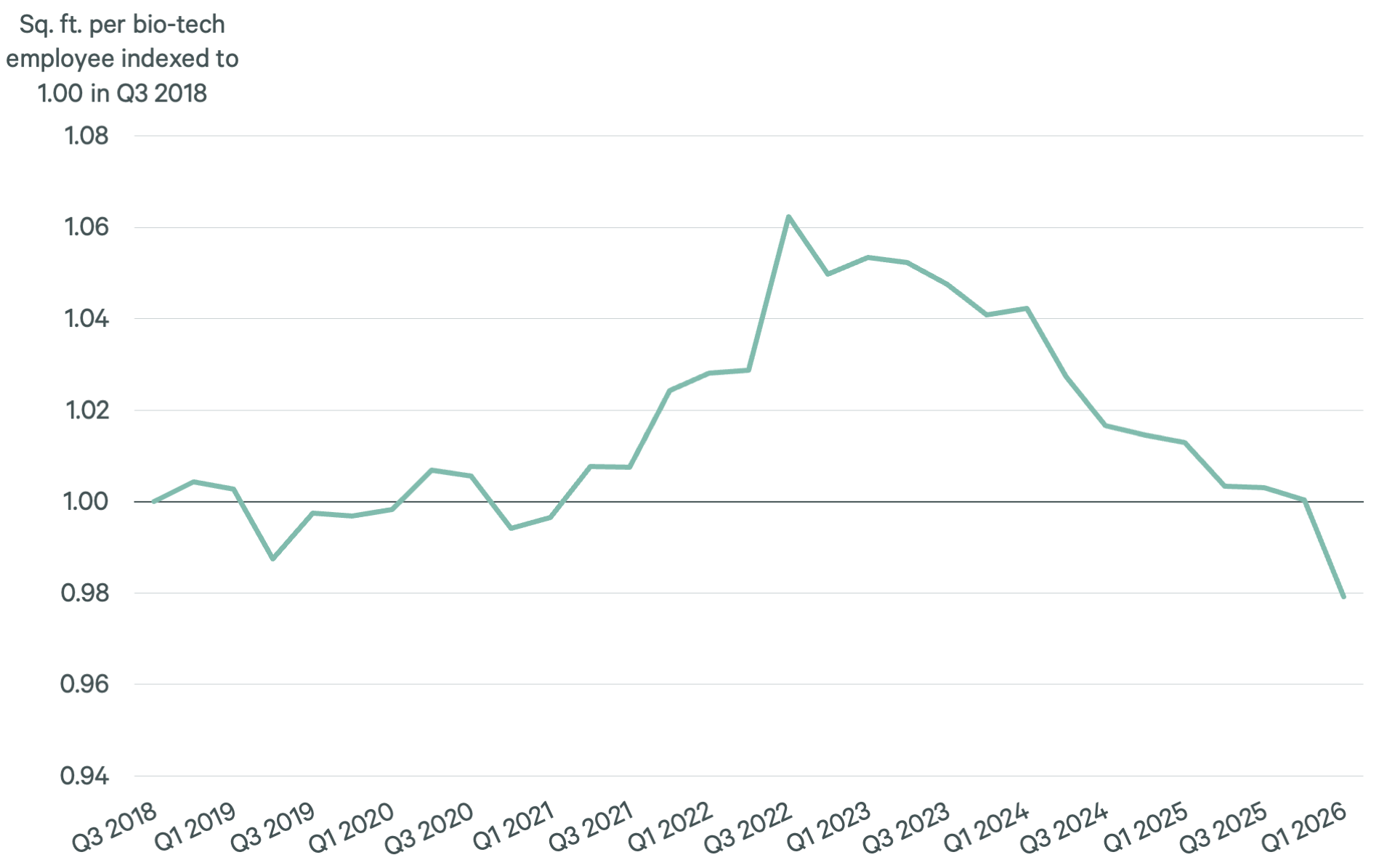
Life sciences companies have shed a significant amount of excess space over the past several years, while maintaining a relatively stable talent base. This has led to markedly improved space efficiency and utilization across their portfolios. The trend is most pronounced in biotechnology R&D, where occupied space per employee has now fallen below pre-pandemic levels. This signals that life sciences employers’ real estate portfolios have become leaner, more efficient and closer to prior norms.
Figure 3: Sq. Ft. of Occupied Lab/R&D Space per Biotech R&D Employee
04. Venture Capital Activity Portends Employment Growth
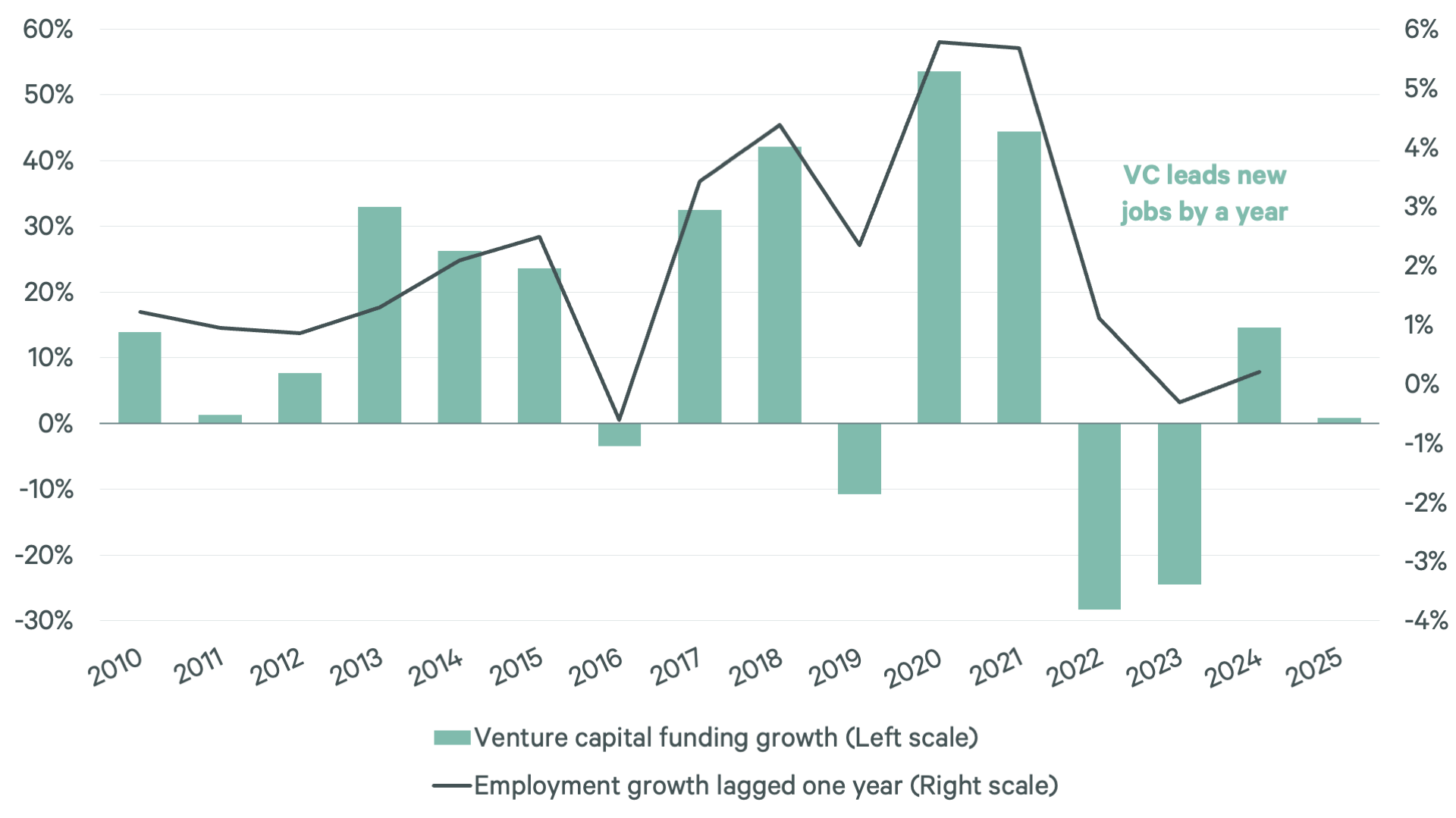
Rebounding venture capital investment in 2025 is a reliable leading indicator of life sciences employment growth in 2026. Medtech and biotechnology companies captured outsized VC allocations in 2025, pointing to more robust hiring in those sectors. The San Francisco Bay Area led all U.S. markets with a $950 million gain in venture capital investment, signaling that it may see strong life sciences employment growth this year.
Secondary life sciences markets like Houston, Chicago and Denver-Boulder also posted significantly higher venture capital investment in 2025, but some of the biggest gains occurred in emerging markets like Miami-Fort Lauderdale, Austin, Pittsburgh and Dallas-Fort Worth.
Figure 4: Life Sciences Venture Capital Activity Portends Employment Growth
05. Talent Pipeline Evolving for New Growth Sectors
For the first time in many years, the number of life sciences degrees and certificates awarded in the U.S. fell slightly in 2025. Degrees being pursued by new students reflect where the industry is heading. Majors in pharmaceutical sciences (up by 20% last year) and biomathematics/bioinformatics/computational biology (up by 4%) indicate that students are seeking to capitalize on the industry's increasing reliance on AI and data-driven drug development.
Secondary markets are also producing a growing share of PhDs, signaling that sources of top talent are diversifying. Between the academic years ending 2012 and 2024, the share of life sciences PhD graduates in secondary markets rose to 17.3% from 16.6%, while the share from the Big 3 (Boston, San Francisco and San Diego) fell to 8.4% from 9.6%.
06. Boston, San Francisco Remain Top Markets
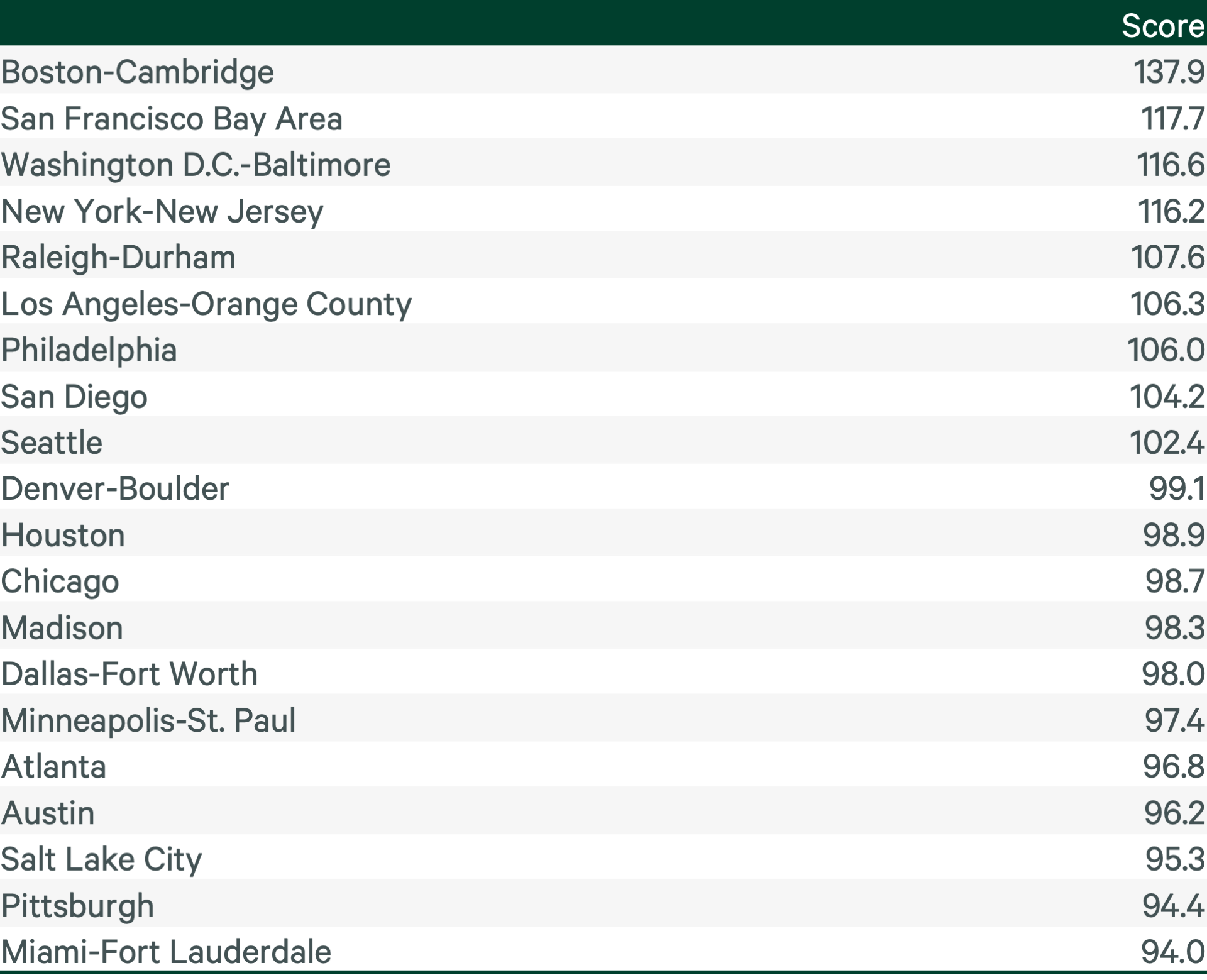
Boston-Cambridge remained the nation's premier market for life sciences R&D talent last year, leading in bioengineers, biochemists, biophysicists and biological technicians. The San Francisco Bay Area followed closely, with an added edge in technology and AI expertise. However, the emerging markets of Madison, WI and Dallas-Fort Worth rose in the rankings, while established centers like New York, Los Angeles, Raleigh-Durham and San Diego continued to strengthen their positions as top talent markets.
Figure 5: 2026 Top Markets for Life Sciences R&D Talent
Source: CBRE Research, Q2 2026.
Opportunities for Occupiers & Investors
Despite improvement in the job market and a more favorable capital markets environment, life sciences lab/R&D markets remain oversupplied, with vacancy near its highest level in years. However, there soon may be increased competition among occupiers for available space. Secondary and emerging markets may offer companies more opportunities to access new talent, fueling future growth.
For investors, leasing demand appears likely to increase this year, based on employment and capital markets gains. Investors should be more cognizant of certain life sciences industry growth sectors and more divergent geographic opportunities than they were during the boom cycle of a few years ago.
Related Insights
-
Viewpoint | Evolving Workforces
Business Insights: How Health Systems Can Drive Enterprise Strategy with Unified Real Estate Teams
May 6, 2026
Integrated real estate organizations help health systems improve capital efficiency, speed to market and long‑term asset performance.
-

Explore the forces driving the life sciences recovery. Lab construction is easing while capital markets signal upside—see what's driving the life sciences inflection point

