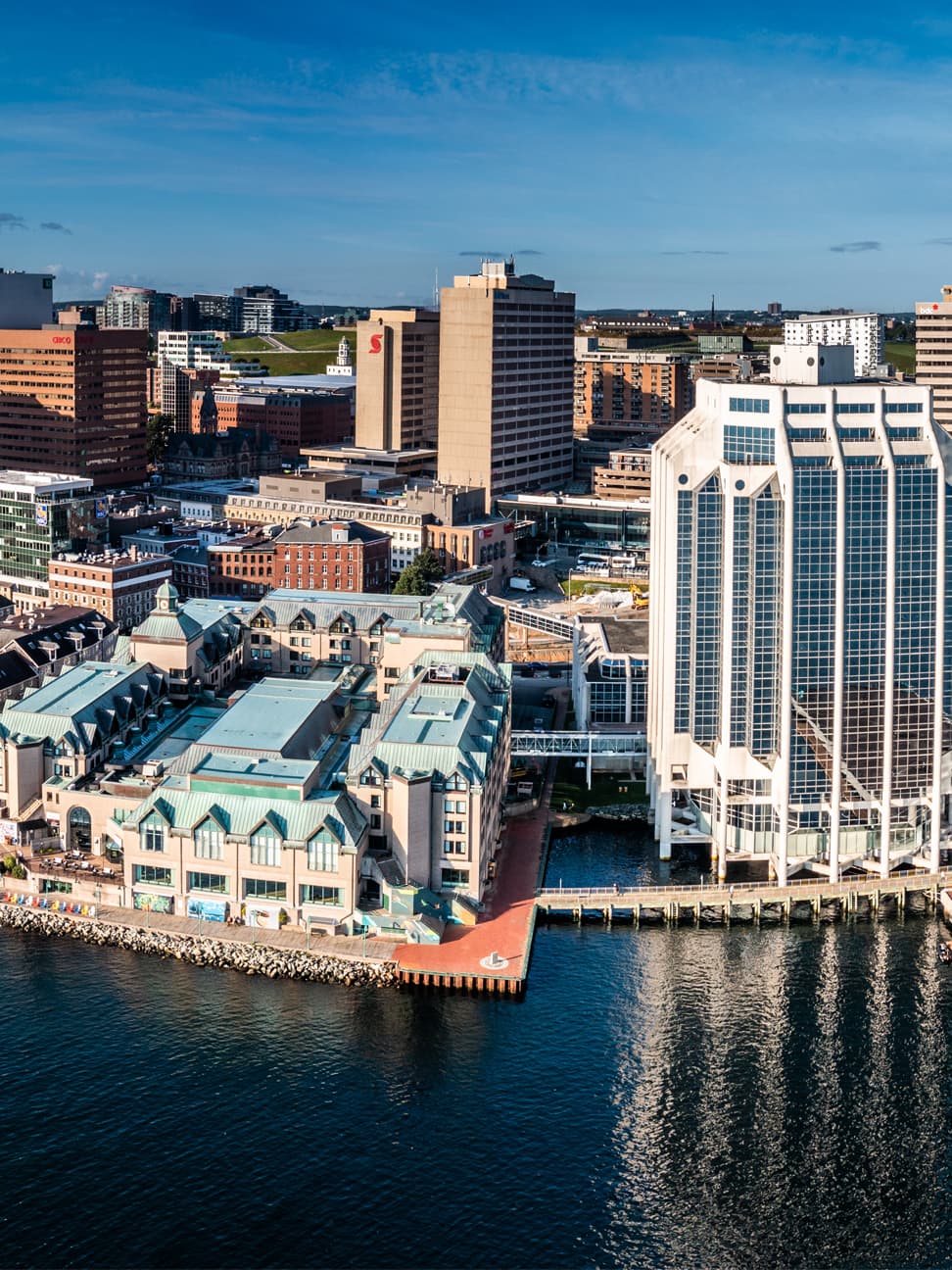
Halifax, NS
CBRE Outlook: The Priorities Shaping Canada’s Future Are Converging in the Atlantic Region
November 19, 2026
Media Contact
Communications & Media Manager

Atlantic Canada is moving closer to the centre of Canada’s economic story, creating opportunities
Atlantic Canada continues to adapt and evolve and attendees at yesterday’s CBRE Atlantic Market Outlook event heard that increasingly many of the priorities shaping this country’s future are converging in the Atlantic Region. “That marks an important shift,” CBRE Halifax Sales Manager Edwina Govindsamy told a Halifax Convention Centre audience.
“For much of our history we’ve been on the periphery. But today Atlantic Canada is moving closer to the centre of Canada’s economic story and that's creating new opportunities for businesses, investors and communities across the region. Decisions being made today will shape our region for decades to come. Investment is growing, jobs are being created and the geography of opportunity is changing. But with that momentum comes pressure.”
Here are highlights from CBRE’s Atlantic Canada outlook.
Atlantic Canada Is Seeing Significant Defence Investment
- The scale of defence-related investment across Atlantic Canada is unprecedented. Billions are being invested to modernize defence infrastructure, build new facilities and expand training and operational capacity in Nova Scotia, New Brunswick and Newfoundland and Labrador.
- “For our industry,” Govindsamy said, “the most interesting story is what happens beyond the base gates. We're seeing those investments spark new activity in real estate.”
- Two of the year’s largest trades in Atlantic Canada were CBRE deals, with Department of National Defence’s (DND) purchase of Halifax Gate, a 475-acre waterfront lot that will have a range of DND uses, and a 140-unit apartment complex for Canadian Armed Forces members near Shearwater, NS.
- Defence investment supports a broader ecosystem, from shipbuilding and aerospace to engineering infrastructure and specialized supply chains. And every part of that ecosystem creates another layer of demand. Defence is the catalyst; the ecosystem surrounding it is the opportunity.
Trade Diversification Highlights the East Coast Advantage
- As Canada works to diversify trade beyond North America, particularly with Europe and Asia, the East Coast advantage is getting harder to ignore. The Atlantic Region is home to major ports with some of the deepest ice-free natural harbours in the world. And with direct rail access to major North American markets the region is uniquely positioned to serve the rest of Canada and beyond.
- In Halifax containers can move directly from ship to rail. And in Saint John nearly half a billion dollars in port upgrades were recently announced. But roughly 70% of what comes through Atlantic ports doesn’t stay there, it continues to Central Canada and the U.S. “What if we could capture just a little bit more?” Govindsamy said. “That would mean more of the economic activity surrounding those goods happen here instead of simply passing through.”
Investors Are Placing Long-Term Bets on Atlantic Canada
- Governments, institutions and private investors are placing long-term bets on Atlantic Canada because they believe growth will continue. And evidence of that confidence is being seen in where capital is deployed. The latest REALPAC Property Index ranked Halifax second in Canada for annual total returns and it’s the only major market where capital values are growing.
- Capital is increasingly looking beyond traditional gateway markets in search of growth opportunities. That's important because capital tends to move before demand becomes obvious. Investors aren't allocating capital based solely on where demand exists today. “They're investing where they believe demand will exist five, 10 and 15 years from now,” Govindsamy said. “Capital follows conviction.”
Talent Attraction Strategy Must Be Deliberate
- CBRE's 2026 Scoring Tech Talent report ranked Halifax the #2 emerging Tech Talent market in North America for a second year in a row. That didn't happen simply because companies decided they wanted office space in Halifax. Talent came first and jobs followed. Then came real estate demand. The same talent equation now applies to defence, clean energy, healthcare and data infrastructure.
- “If we're serious about building specialized industries in Atlantic Canada our talent strategy must be just as deliberate as our investment strategy,” Govindsamy said. “We need to attract the right people from outside the region and the country. We need to develop more talent here and retain more of the students and workers already here.”
More Industrial Real Estate Is Required
- In Q3 Halifax saw its strongest quarter of positive net absorption of industrial space since 2020, bringing availability down to 5.6%. More inventory is needed. There are currently multiple 100,000 to 200,000 sq. ft. tenants in the market while the largest existing space can only accommodate ~50,000 sq. ft.
- This is a problem when a major industrial requirement enters the market. If they don’t have somewhere to go they will widen their search. “The bigger risk isn't that Halifax loses a requirement to Moncton or Saint John it's that Atlantic Canada loses it altogether,” Govindsamy said. “So we need to create room for bigger opportunities and larger sites that are serviced, approved and ready when they arrive.”
Housing Supply Will Determine Where Growth Occurs
- Residential development is clustering around employment centres, transportation corridors and mixed-use districts where residents can access jobs, services and amenities. This summer there were a record ~14,000 rental units under construction across Halifax.
- The challenge moving forward isn't simply building more. It's building the right housing. CMHC data shows that newer rental buildings are experiencing more vacancy than older stock. The most affordable rental units remain the most supply constrained, while higher-priced product is taking longer to lease.
- “If we're going to attract and retain the people needed to support this next phase of growth we have to give them somewhere they can actually build a life,” Govindsamy said. “Housing isn't just a residential issue anymore it's economic infrastructure.”
CBRE Group, Inc. (NYSE: CBRE), a Fortune 500 and S&P 500 company headquartered in Dallas, is the world’s largest commercial real estate services and investment firm and a premier provider of critical infrastructure services. The company has more than 155,000 employees serving clients in more than 100 countries. CBRE serves clients through four business segments: Advisory (leasing, sales, debt origination, mortgage servicing, valuations); Building Operations & Experience (facilities management, property management, flex space & experience, critical infrastructure); Project Management (program management, project management, cost consulting); Real Estate Investments (investment management, development).
Please visit our website at www.cbre.com.